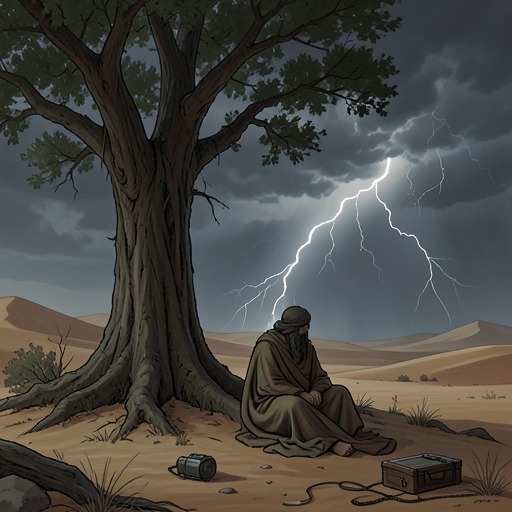
Dasa’s Peace Party
The Glass Bead GameDasa’s Peace Party is the small faction at Dasa’s court that seeks to end the border conflict through mediation and limited concessions. Its proposal is a practical expression of Dasa’s grief over repeated violence, but its weakness within the court makes peace an increasingly isolated position as the kingdom prepares for war.
Composition and Position
The party consists of Dasa and only a few older Brahmans, learned men absorbed in meditation. It is outnumbered by the opposing war party, which includes most of the priests and all the army officers. The division is therefore not merely a disagreement between two rulers: it sets a small circle of contemplative elders and their king against the principal religious and military forces at court.
Dasa’s Peace Proposal
After repeated raids and reprisals along the border, Dasa questions the purpose of the continuing guerrilla warfare. He grieves for those killed, for the victims of the fighting, and for the peace of his own days. He asks whether a respected neighboring prince might mediate and says he would willingly help secure peace by surrendering a few pastures and villages. The proposal makes the party’s position concrete: it would accept limited territorial losses to stop further killing.
Opposition and Political Isolation
Dasa’s wife Pravati rejects concessions, warning that the enemy would use his good nature and fear of war to obtain one piece of land and population after another, then resume open war once his kingdom was weakened. She frames the stakes as the survival or annihilation of the whole, not the value of particular villages or herds. Their disagreement becomes a violent quarrel and a serious estrangement. The contrast between Dasa’s sorrow and Pravati’s resolve reveals the personal cost of the party’s position as well as its political difficulty: its proposed compromise is seen by its opponents not as a path to peace but as a danger to the realm.
War Party and Aftermath
The border raids and breaches of peace continue until the rainy season brings a temporary pause. Meanwhile the country arms itself, and the hostile neighbor does likewise. The war party’s strength becomes visible in the preparations: the chief huntsman teaches Prince Ravana archery, and Pravati takes her son to every troop inspection. Against this mobilization, Dasa’s peace faction remains very small. He sometimes longs to return to the forest hermitage and seek the yogi’s counsel, but doubts that wisdom could change events once he is caught in the stream of political life. The party’s immediate prospects are thus defined by the mounting forces around it: its appeal to mediation persists, but the court and country move toward armed conflict.